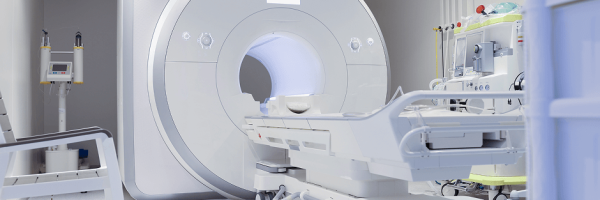
Medical Springs for Critical Medical Device Applications
Medical springs are essential components in devices where precision, reliability, and material integrity directly impact performance and patient safety. As an experienced medical spring manufacturer, Coiling Technologies engineers and manufacture high-performance medical springs designed for demanding healthcare and laboratory environments. From surgical instruments to diagnostic equipment and implantable systems, our medical device springs are produced to exact specifications using advanced materials and ISO-certified processes.
Medical applications require consistent force output, dimensional accuracy, corrosion resistance, and fatigue durability. Standard springs rarely meet these requirements. That is why leading OEMs rely on precision-engineered medical springs tailored to their unique mechanical and environmental constraints.
Precision Medical Springs for High-Performance Devices
Every medical spring must function predictably under repeated cycling, sterilization exposure, and varying environmental conditions. We manufacture medical springs that support:
- Controlled force and deflection requirements
- Compact assemblies with limited operating space
- High-cycle performance for repeated actuation
- Corrosion resistance in sterilization and chemical environments
- Temperature stability during autoclaving or cryogenic exposure
Our engineering team works directly with device manufacturers to design medical device springs that meet tight dimensional tolerances and application-specific load requirements.
Types of Medical Springs We Manufacture
As a full-service medical spring manufacturer, Coiling Technologies produces a wide range of spring types used across medical and laboratory equipment:
Compression Medical Springs
Compression springs are used in infusion pumps, inhalers, surgical instruments, and implantable devices requiring controlled compression forces.
Extension Medical Springs
Designed for tension-based applications, extension springs are used in surgical clamps, retractors, and device assemblies.
Torsion Medical Springs
Torsion springs are ideal for pivoting mechanisms in handheld instruments and articulated medical tools.
Wave Springs
Our wave springs reduce operating height while maintaining force, making them ideal for compact medical assemblies.
Custom Coil Springs
We design and manufacture custom coil springs tailored for specialized medical device requirements, including non-standard geometries and load profiles.
Every medical spring is manufactured to precise specifications, ensuring predictable performance and long-term durability.
Medical Spring Material Expertise
Material selection is critical for medical springs, especially in environments involving sterilization, body fluids, chemical exposure, or high temperatures. Coiling Technologies offers a broad selection of materials suitable for medical applications:
Stainless Steels
- 302, 316, 17-7, 17-4
- Excellent corrosion resistance
- Suitable for repeated sterilization cycles
Cobalt-Nickel Alloys (Elgiloy, MP35N)
- Exceptional fatigue life
- High resistance to corrosion and stress cracking
- Suitable for demanding cyclic environments
Nickel-Based Alloys (Inconel)
- High strength at elevated temperatures
- Resistance to oxidation and corrosion
Specialty Alloys
- Rene 41 and other high-performance materials
- Ideal for extreme environments or specialized device requirements
Our ability to manufacture springs using exotic alloys sets us apart as a medical spring manufacturer capable of supporting complex, high-performance applications.
Manufacturing Capabilities for Medical Device Springs
Medical device OEMs require consistency, repeatability, and traceability. Coiling Technologies operates as an ISO 9001-certified manufacturer, providing controlled processes for the production of medical springs.
Capabilities include:
- CNC coiling and forming for tight tolerances
- Heat treatment for optimized mechanical properties
- Shot peening to enhance fatigue resistance
- Surface finishing and specialty coatings
- Load testing and dimensional inspection
- Magnetic particle inspection when required
These processes ensure every medical device spring performs reliably within the intended application.
Applications of Medical Springs
- Surgical instruments
- Infusion and drug delivery systems
- Respiratory equipment
- Diagnostic imaging devices
- Laboratory and shaker equipment
- Implantable devices
- Dental tools and orthodontic systems
- Robotic-assisted surgical systems
In each application, spring performance contributes directly to device function and reliability.
Design Support and Engineering Collaboration
As a collaborative medical spring manufacturer, we support engineering teams throughout the development process. Our team assists with:
- Spring rate calculations
- Load and deflection analysis
- Material selection guidance
- Prototype development
- Performance validation testing
For customers with existing components, we can reverse engineer and optimize designs to improve durability and lifecycle performance.
Why Choose Coiling Technologies for Medical Springs?
- ISO-certified quality systems
- Over 50 years of spring manufacturing experience
- Expertise in exotic alloys such as Elgiloy, MP35N, Inconel, and Rene 41
- Capability to produce custom, large, or complex spring designs
- Flexible production capacity from prototype to high-volume manufacturing
Unlike catalog suppliers, we focus on engineered solutions. Our medical springs are manufactured specifically for your application, ensuring performance and reliability.
Precision, Performance, and Reliability
Medical equipment operates in environments where failure is not an option. From high-cycle handheld instruments to compact assemblies in advanced diagnostic systems, our medical springs are engineered to meet demanding specifications.
By combining advanced materials, precision manufacturing, and collaborative engineering support, Coiling Technologies delivers dependable medical device springs designed to perform under real-world operating conditions.
Request a Quote
If you require precision-engineered medical springs for your device application, Coiling Technologies is ready to support your project.
Submit your specifications to our engineering team:
Our team will review your requirements and provide a tailored solution designed for performance, durability, and reliability.
Related Articles
- Coiling Technologies Inconel X-750 Oil & Gas Springs
- Beryllium Copper Disc Spring
- The Popularity of Torsion Springs
Medical Springs FAQs
What separates a medical device spring from a general industrial spring?
Duty cycle, size, and consequence of failure. A spring inside a surgical instrument or an infusion pump may actuate hundreds of thousands of times over its life at a small deflection, so fatigue behavior at low stress amplitude matters more than peak load capacity. Wire sizes are small, which means dimensional variation that would be invisible on a heavy duty spring shows up directly as scatter in spring rate. Repeated steam sterilization exposure adds a corrosion requirement most industrial springs never see. Coiling Technologies builds compression, extension, torsion, wave, and custom coil springs for these applications.
What quality certification does Coiling Technologies hold for medical work?
Coiling Technologies is certified to ISO 9001:2015 and audited regularly. That is the certification the company carries. It is not ISO 13485, and it does not include FDA establishment registration. If your program requires a supplier operating under a medical device quality management system, that requirement has to be satisfied through your own supplier qualification process and controls, or elsewhere in your supply chain. Many device OEMs qualify ISO 9001 suppliers for components under their own incoming inspection and documented first article approval. Raise the question before drawings change hands, because the answer decides whether CTI fits your program.
Which alloys are specified for medical springs, and what does each one bring?
Coiling Technologies works in 302, 316, 17-7, and 17-4 stainless, the cobalt nickel alloys Elgiloy and MP35N, Inconel nickel alloys, and Rene 41. Type 302 is the general purpose austenitic spring stainless. Type 316 adds molybdenum, which improves resistance to chloride pitting and makes it the better choice for repeated autoclave cycles or saline contact. The precipitation hardening grades 17-7 and 17-4 reach higher strength than 302 after aging. Elgiloy and MP35N give the highest fatigue strength and corrosion resistance of the group. Inconel and Rene 41 hold strength at high service temperature.
How do 316 stainless and MP35N compare for a device that cycles constantly?
Type 316 is cold drawn to spring temper and works well where stress amplitude is moderate and corrosion resistance matters more than fatigue life. MP35N is a 35 percent cobalt, 35 percent nickel, 20 percent chromium, 10 percent molybdenum alloy that is cold worked and then aged, reaching tensile strength far above any austenitic stainless while staying essentially non-magnetic and highly resistant to chloride pitting and stress corrosion cracking. For a spring cycling continuously in a handheld instrument or a pump mechanism, MP35N buys fatigue life that 316 cannot reach. It costs considerably more, so it earns its place on cycle count.
How do I handle magnetic permeability if my device goes near imaging equipment?
Magnetic response is a material and processing question, so it belongs in the design conversation rather than in inspection. Cobalt nickel alloys such as MP35N and Elgiloy stay essentially non-magnetic in the cold worked and aged condition. Austenitic grades like 302 and 316 start non-magnetic in the annealed state but pick up measurable permeability from the heavy cold work spring wire receives, and more from coiling strain. The precipitation hardening grades 17-7 and 17-4 are ferromagnetic by structure. Tell the engineering team the permeability limit up front, because it narrows the material list immediately.
Why does surface condition matter so much on small diameter medical springs?
Fatigue cracks in a spring start at the wire surface, and at small wire diameters a scratch, seam, or draw mark is a large fraction of the section. Cleanliness compounds the problem, since a rough surface in a device that gets sterilized repeatedly holds soil and gives chlorides a place to concentrate and initiate pitting. Coiling Technologies offers shot peening to put compressive stress into the surface layer and extend fatigue resistance, plus surface finishing and specialty coatings. Load testing, dimensional inspection, and magnetic particle inspection are available where the drawing calls for them.
What documentation can Coiling Technologies provide with a medical spring order?
More than most buyers expect from an ISO 9001 supplier, and this is where a qualification package gets built. CTI can supply material certifications carrying chemistry and mechanical property data for the wire lot, dimensional inspection reports with measured values against your drawing tolerances, first article inspection documentation, load test data, and traceability from the finished spring back to the incoming raw material. That traceability chain is what lets your quality group tie a spring in a device history record to a specific heat of wire. Specify the documentation you need on the purchase order so it travels with the shipment.