Explore Our Industrial Spring Materials
Coiling Technologies manufactures custom springs in a variety of materials, including high-temperature and exotic alloy springs. Since 1976, we've specialized in tough heavy-duty springs made to meet the most exacting specifications in the industry today. Spring materials we're experienced with include Inconel X750, MP35N, Elgiloy, Stainless Steel, Chrome Silicon, Alloy Carbon steels, and many other exotic spring and non-exotic spring-type materials.
Spring Materials For Any Application
Each material has a different chemical composition and varied properties. We assist you in choosing the right material that well suits the environment in which your spring operates. From custom exotic alloy springs to standard metal springs, Coiling Technologies can manufacture the perfect spring for your project. Contact us today!
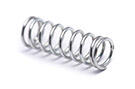
Carbon Alloy Springs
Learn More
High Strength Carbon Alloy Springs
Learn More
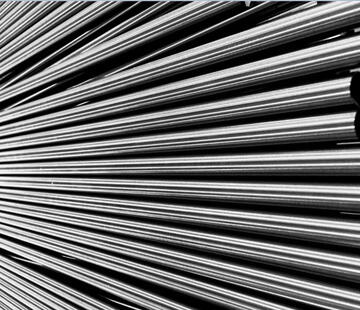
Cobalt Nickel Alloy Springs
Learn More
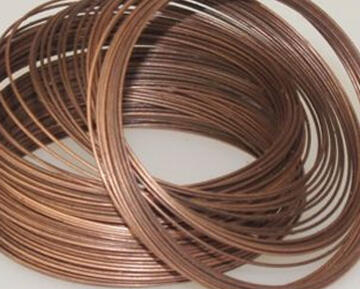
Copper Based Alloy Springs
Learn More
Hot Rolled Alloy Springs
Learn More
Inconel Nickel Alloy Springs
Learn More
Nickel Alloy Springs
Learn More
Stainless Steel Springs
Learn More
Titanium Springs
Learn More
Spring Materials FAQs
How do I choose the right spring material for my application?
Material selection depends on five primary factors evaluated together: (1) mechanical load and required spring rate—determines minimum tensile strength needed in the wire; (2) operating temperature—establishes the upper limit for carbon steels (approximately 250°F), stainless steels (approximately 500–650°F depending on grade), and nickel superalloys (up to 1,300°F+); (3) corrosive environment—determines whether carbon steel with coating, stainless, copper alloy, or nickel/cobalt superalloy is required; (4) space constraints and weight limits—affects whether a high-strength material enabling a smaller spring is justified by its cost premium; and (5) cycle count and fatigue life requirements—drives the choice between economy grades (hard drawn wire) and premium grades (music wire, high tensile chrome silicon, 17-7 PH). Coiling Technologies' engineering team evaluates all of these factors to recommend the material meeting performance requirements at the most cost-effective specification.
What is the difference between carbon alloy, stainless steel, and exotic alloy springs?
Carbon alloy springs (music wire, hard drawn wire, chrome silicon, 5160 steel) are the most cost-effective option for moderate temperatures and non-corrosive environments. They offer the highest tensile strength-to-cost ratio of any spring wire family and are used in the majority of commercial spring applications. Stainless steel springs add inherent corrosion resistance for wetter or chemically exposed environments, at a material cost premium of roughly 3–5× over carbon steel. Exotic alloys—Inconel, Hastelloy, titanium, beryllium copper, Elgiloy—are reserved for the most demanding combinations of high temperature, corrosion, weight, conductivity, or biocompatibility requirements, at a material cost premium of 10–100× over carbon steel depending on the alloy.
Which spring materials perform best in high-temperature applications?
For continuous service above approximately 700°F–800°F, nickel-based superalloys are the established material family for springs: Inconel 718 retains reliable strength up to approximately 1,300°F; Inconel X-750 provides superior creep resistance above 1,200°F; Rene 41 and other advanced superalloys serve even higher temperature applications in aerospace. Between approximately 475°F and 700°F, austenitic stainless grades such as 316 stainless (approximately 700°F rated) and precipitation-hardening grades such as 17-7 PH CH900 (approximately 650°F rated) are commonly specified. Chrome silicon and high tensile chrome silicon serve applications up to approximately 475°F–500°F. Carbon spring steels are limited to approximately 250°F.
Which spring materials are best suited for corrosive or marine environments?
The appropriate material depends on the specific corrosive agents. For general freshwater or mild atmospheric exposure, 302 stainless steel is adequate. For marine atmospheric exposure and moderate chloride environments, 316 stainless steel (with molybdenum for improved pitting resistance) is the practical choice. For seawater immersion and severe chloride environments, Inconel 625 or Hastelloy C-276 are the standard specifications—both offering strong resistance to chloride pitting and stress corrosion cracking. For environments combining corrosive chemistry with electrical conductivity requirements, beryllium copper or phosphor bronze are the primary candidates.
Can Coiling Technologies help me select a material if I only have a performance spec, not a material callout?
Yes. If you provide your load, deflection, operating environment, space envelope, cycle life requirements, and any weight or conductivity constraints, Coiling Technologies' engineering team can recommend the most cost-effective material and spring geometry that meets the specification—rather than defaulting to whatever material happens to be on hand. This engineering consultation is available before an order is placed and is a standard part of the quoting process for new or complex spring designs.
Does Coiling Technologies manufacture springs in specialty alloys beyond what is listed on the website?
Yes. Coiling Technologies regularly manufactures springs in specialty and exotic alloys beyond what is listed on standard product pages, including additional nickel superalloys, cobalt alloys, refractory alloys, and other materials used in aerospace, defense, and advanced research applications. If your project requires a less common material or a specific AMS, ASTM, or proprietary alloy designation, contact the engineering team to confirm material availability, coilability in the required wire size, and lead time.