Copper base alloys have high electrical conductivity and resistance to corrosion.
 Copper alloys have sufficient strength, ductility, and hardness which makes them best suited for springs operating in relay contacts and switch gears.
Some of the key properties are given below:
- Strength, at operating temperatures.
- Good wear or deformation resistance.
- Fatigue strength, especially for springs.
- Dimensional tolerances that meet the needs of advanced technology.
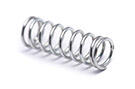
Copper Based Alloys Springs FAQs
Why specify a copper based alloy spring instead of steel or stainless?
Because a copper alloy spring carries current and force at the same time. Copper base alloys have high electrical conductivity and good corrosion resistance, along with enough strength, ductility, and hardness to work as spring elements, which is why they dominate relay contacts and switch gear. A stainless or carbon steel spring supplies the force but conducts poorly, so a steel design needs a separate current path. In battery contacts, connectors, grounding springs, brush holders, and switch assemblies the spring is part of the circuit, and that is the case where copper is the only sensible family.
Which copper based alloys does Coiling Technologies work in?
Two families, beryllium copper and phosphor bronze. Beryllium copper is the high end choice, precipitation hardenable, and it delivers the best combination of strength and conductivity available in a copper spring alloy. Phosphor bronze is the volume choice, less expensive, easy to form, with moderate conductivity and good fatigue behavior in wire and flat contact springs. Both have dedicated pages carrying their own design values and specification tables. Selection between them is usually settled by required contact force, conductivity target, and unit cost rather than by corrosion behavior, since both hold up well in normal indoor and enclosure environments.
How do I decide between beryllium copper and phosphor bronze?
Start with contact force and available space. If the required force is high or the envelope is tight, beryllium copper gets there, because its higher strength after aging supports a higher design stress in the same wire size. If force is modest and cost matters more, phosphor bronze covers it. Conductivity is the second axis, since beryllium copper conducts better and suits higher current paths. Operating temperature is the third. The four properties this material page lists, strength at operating temperature, wear and deformation resistance, fatigue strength, and dimensional tolerance, are the right screening criteria in that order.
How much load can a copper alloy spring carry compared with a stainless one?
Less, and that is the tradeoff being made. Copper base alloys have both a lower elastic modulus and lower tensile strength than cold drawn spring stainless, so a copper spring in the same wire size and coil geometry produces a lower rate and reaches its allowable stress at a lower load. Designs compensate with heavier wire, a smaller mean coil diameter, or fewer active coils, and the envelope grows. When an application needs force alone with no electrical function, stainless or a carbon alloy is the better structural answer. Grade specific design values sit on the beryllium copper and phosphor bronze pages.
How do copper alloy springs behave at high temperature?
Copper alloys lose load through stress relaxation at temperatures where a stainless spring is still comfortable, and the loss is permanent. A contact spring holding full force at room temperature can drop measurably after long exposure at temperature under load, which shows up in the field as intermittent contact rather than as a broken spring. Beryllium copper holds up better than phosphor bronze here. Give the operating temperature, expected service life, and whether the spring sits under continuous load or is cycled, because relaxation depends on all three and not on the load rating alone.
Does the aging and finishing work happen in house?
Precipitation hardening copper alloys need a controlled aging cycle after forming to reach final strength, and the cycle has to match both the alloy and the temper the wire arrived in. Heat treating is one of the services Coiling Technologies performs in house, alongside engineering, spring design, non-destructive testing, shot peening, powder coating, and prototyping, all in the same Houston plant under one ISO 9001:2015 quality management system. Keeping forming and thermal processing under one roof removes an outside vendor from the sequence, which shortens the schedule and keeps traceability on a single set of records.