Inconel Springs Built for High-Temperature & Corrosive Environments
Coiling Technologies specializes in the manufacturing of Inconel springs, which are widely used in extreme environments where tremendous heat and corrosion resistance is paramount to the integrity of the end product. We are ISO 9001 Certified and have over 6 decades of combined experience in designing and manufacturing Inconel springs for nearly any application. With the help of our experienced engineers and state of the art machinery, we can deliver the ideal Inconel spring to your specs in specialty materials such as Inconel X-750, Inconel 718, and other nickel alloys.
Inconel Springs We Manufacture
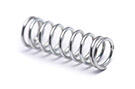
Inconel 600 Springs
Learn More
Inconel 625 Springs
Learn More
Inconel 718 Springs
Learn More
Inconel X750 Springs
Learn More
Inconel Nickel Alloy Springs FAQs
What is Inconel and why is it used for spring manufacturing?
Inconel is a family of austenitic nickel-chromium-based superalloys engineered to maintain exceptional mechanical strength, oxidation resistance, and corrosion performance at temperatures and in chemical environments where stainless steel and carbon steel alloys rapidly degrade. Depending on the grade, Inconel springs perform reliably from cryogenic temperatures down to −423°F (−253°C) to above 1,800°F (982°C) in select grades, providing a service range no standard spring steel can approach. This combination of properties makes Inconel the dominant material in jet engines, subsea equipment, chemical reactors, nuclear systems, and other extreme-environment applications.
Which Inconel grade should I choose for my spring application?
Grade selection depends on the balance of temperature resistance, corrosion resistance, strength, and application-specific requirements. Inconel 600 is the general-purpose grade for high-temperature service in both oxidizing and reducing environments. Inconel 625 excels in seawater, subsea, and chloride-rich environments due to exceptional resistance to pitting and chloride-induced stress corrosion cracking. Inconel 718 delivers the highest strength across both cryogenic and elevated-temperature service (up to 1,300°F / 704°C) and is the most widely specified grade in aerospace and oil and gas programs. Inconel X-750 is preferred for non-magnetic applications, very large spring designs, and sustained creep resistance above approximately 1,200°F (649°C). Coiling Technologies' engineering team can match the correct grade to your specific operating conditions and qualification requirements.
Can Inconel springs be used in sour gas or H₂S-containing service?
Yes, with appropriate grade and heat treatment selection. Inconel 718 is widely specified for sour gas service and can be heat treated to meet NACE MR0175/ISO 15156 requirements governing hydrogen embrittlement and stress corrosion cracking resistance in H₂S-containing environments. Inconel 625 also performs well in sour environments, particularly where chloride-rich production fluids accompany H₂S. For the most aggressive sour service conditions, the specific alloy selection and processing condition should be verified against the applicable NACE standard before committing to a spring specification.
At what temperatures can Inconel springs be used reliably?
Service temperature varies by grade. Inconel 625 and 600 are rated for service up to approximately 1,800°F (982°C) in oxidizing environments, though spring mechanical properties decline above approximately 1,200°F. Inconel 718 performs reliably up to 1,300°F (704°C) while also functioning at cryogenic temperatures as low as −423°F (−253°C). Inconel X-750 maintains reliable mechanical performance up to approximately 1,300°F (704°C) with superior creep resistance above 1,200°F. These ranges far exceed 302 stainless steel (rated to approximately 500°F) and 17-7 PH stainless in CH900 condition (approximately 650°F continuous).
How do Inconel springs compare to 316 stainless steel in chloride-containing environments?
In aggressive chloride environments, Inconel alloys—particularly Inconel 625—substantially outperform 316 stainless steel. While 316 stainless offers adequate corrosion resistance in mild acid and moderate chloride exposure, it is susceptible to chloride-induced pitting and stress corrosion cracking at elevated temperatures. Inconel 625 is highly resistant to chloride stress corrosion cracking across a wide temperature range and resists pitting in concentrated chloride solutions where 316 stainless would fail. For subsea, marine, or chemical processing applications with significant chloride exposure, Inconel is typically the correct material specification.
What size range can Coiling Technologies produce Inconel springs in?
Coiling Technologies manufactures Inconel springs across a wide range—from precision wire diameters as fine as a few thousandths of an inch for instrumentation and medical applications up to heavy-duty industrial springs from bar stock with wire diameters up to 2.50 inches (65 mm). This range supports everything from aerospace fuel system springs to large subsea valve actuator springs within a single alloy family.
What industries most commonly specify Inconel springs?
Primary industries include aerospace and defense (jet engine hot sections, thrust reversers, actuator springs), oil and gas (downhole tools, wellhead valve springs, subsea equipment, sour service applications), chemical processing (reactor internals, heat exchangers, valve components), nuclear power (fuel assembly springs, control rod mechanisms), power generation (gas turbine components, high-pressure steam systems), and marine and deep sea applications. In each sector, Inconel is specified because no commonly available steel or stainless steel meets the combined temperature and corrosion demands of the application.
What information should engineers provide when requesting a custom Inconel spring quote?
To receive an accurate quote and begin manufacturing, engineers should provide: the Inconel grade required (or operating conditions if grade is undecided); spring type (compression, extension, torsion, wire form); wire diameter; coil dimensions (OD, ID, or mean diameter); free length and working length; load and rate requirements; operating temperature and chemical environment; applicable material or design standards (AMS, ASTM, API, NACE); required heat treatment condition; finish or coating requirements; prototype and production quantities; and any certification or third-party inspection requirements.